
 Submit RFI/RFP

 Request Consultation
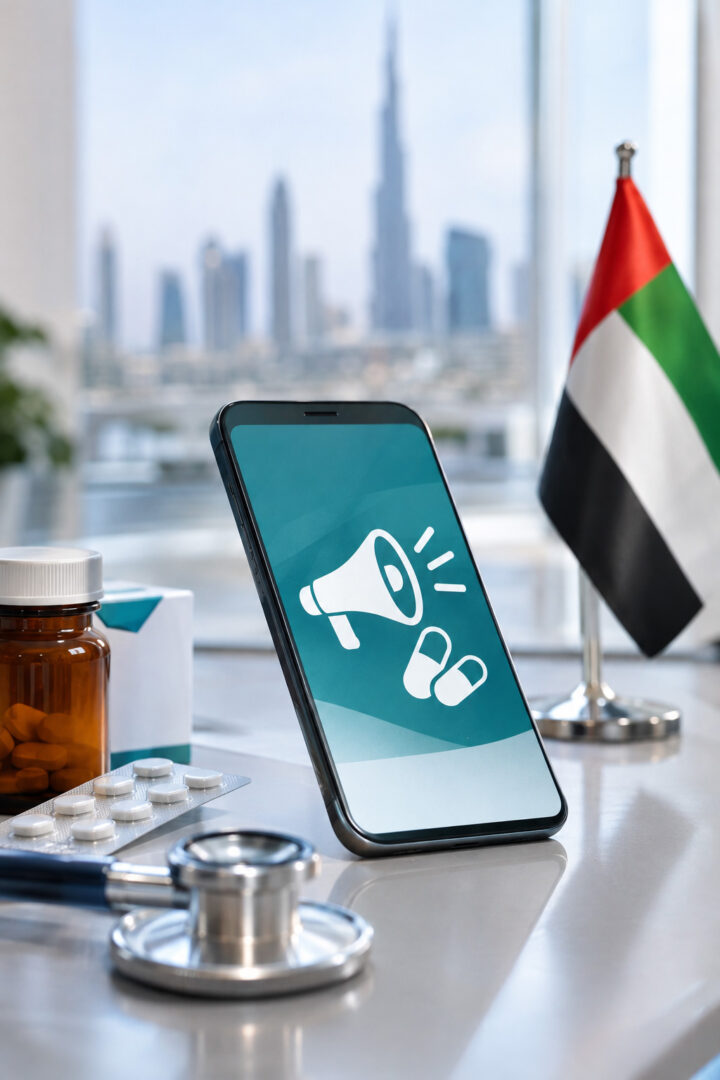
The Emirates Drug Establishment (EDE) has launched its pharmacovigilance awareness campaign, “Speak Up… Stay Safe” in collaboration with five UAE health authorities as part of its participation in MedSafetyWeek 2026, taking place from 2 to 8 November.
The campaign brings together the Ministry of Health and Prevention (MOHAP), Emirates Health Services (EHS), Dubai Health Authority (DHA), Department of Health – Abu Dhabi (DoH), and Sharjah Health Authority. It aims to promote the reporting of suspected adverse drug reactions and strengthen a coordinated national approach to protecting patients and supporting the safety of medical products.
A Global Initiative to Strengthen Medicine Safety Reporting
The campaign coincides with the eleventh edition of the global MedSafetyWeek initiative, coordinated by the Uppsala Monitoring Centre in collaboration with medicines regulatory authorities, pharmacovigilance centres, and international organisations worldwide.
This year’s campaign carries the message: “Adverse reactions… Don’t ignore them, report them!” It places patients’ experiences at the centre of its awareness activities and highlights the value of information provided by individuals and healthcare professionals about suspected adverse reactions experienced during medicine use.
Through this initiative, EDE seeks to strengthen public awareness of the importance of reporting and clarify the respective roles of patients, caregivers, healthcare professionals, and pharmaceutical establishments in communicating safety information.
Strengthening Pharmacovigilance Throughout the Product Lifecycle
EDE emphasises that its role as a federal regulatory authority extends beyond coordinating awareness activities. It also involves connecting public reporting with scientific follow-up, assessment, and regulatory decision-making.
The Establishment highlights that responsibility for medicine safety does not end once a product receives marketing authorisation and enters the market. Instead, monitoring continues throughout the product lifecycle as new information becomes available from its use.
Reports of suspected adverse reactions represent one source of information considered alongside other scientific evidence. Their assessment can help identify potential safety signals that may require further investigation and support appropriate decisions based on the available evidence.
This process highlights the importance of structured safety signal management within pharmacovigilance systems, where reported information is evaluated to determine whether further assessment is necessary.
Campaign Activities and Stakeholder Engagement
The campaign programme includes several educational and professional activities targeting different groups involved in medicine safety.
These activities include:
- Virtual workshops for healthcare professionals: Sessions addressing medicine safety monitoring and the handling of suspected adverse reactions.
- Awareness visits to the University of Sharjah: Educational lectures introducing students to pharmacovigilance, the importance of reporting, and official reporting channels, together with practical guidance on using these channels.
- A virtual seminar for the pharmaceutical industry: A session addressing the responsibilities of pharmaceutical companies and establishments, as well as applicable pharmacovigilance requirements.
These activities are intended to strengthen understanding of reporting responsibilities and increase awareness of the procedures supporting the safety of medical products.
EDE DAWA: Facilitating Adverse Reaction Reporting
As part of its efforts to develop reporting channels and make them more accessible, EDE has made its smart tool, EDE DAWA, available during the campaign week.
The tool enables members of the community to report potential adverse reactions associated with medical products. It was developed and adopted through EDE’s partnership with the Uppsala Monitoring Centre.
Information submitted through the tool is referred to specialists for review and assessment through the established procedures, supporting the continuous monitoring of medical product safety.
EDE has also encouraged patients, caregivers, and healthcare professionals to use the official reporting channels designated for their respective groups:
- Reporting suspected adverse reactions – Individuals and patients
- Reporting suspected adverse reactions – Healthcare professionals and pharmaceutical establishments
UAE Good Pharmacovigilance Practices: The Regulatory Context
The campaign also has a regulatory dimension following EDE’s adoption, in July 2026, of the Guideline on Controls, Conditions and Good Pharmacovigilance Practices for Medical Products, under Board Chairman Decision No. 27 of 2026.
The guideline provides a national reference defining the responsibilities of relevant stakeholders and the requirements for monitoring and evaluating safety information and managing risks associated with medical products following marketing authorisation.
For Marketing Authorisation Holders (MAHs), understanding and implementing applicable pharmacovigilance requirements is an important part of maintaining compliant safety monitoring systems.
Baupharma’s article on EDE’s Good Pharmacovigilance Practices Guideline and its implementation provides further context on the regulatory responsibilities discussed with industry stakeholders in the UAE.
Baupharma also supports pharmaceutical companies through its Pharmacovigilance Services, covering safety reporting, pharmacovigilance documentation, and signal management.
A Coordinated Approach to Patient Safety
EDE emphasises that an effective pharmacovigilance system requires cooperation between regulatory authorities, healthcare professionals, the pharmaceutical industry, patients, and caregivers.
The campaign highlights the importance of coordinated national efforts, consistent awareness messages, and accessible official reporting channels in encouraging participation and strengthening confidence in the regulatory system.
By connecting community awareness with scientific assessment and regulatory follow-up, the initiative reinforces the role of suspected adverse reaction reporting as part of responsible medicine use and continuous post-marketing safety monitoring.
Conclusion
The Emirates Drug Establishment’s “Speak Up… Stay Safe” campaign highlights the importance of reporting suspected adverse reactions as part of ongoing pharmacovigilance activities.
Through collaboration with five UAE health authorities, educational activities for healthcare professionals and students, engagement with the pharmaceutical industry, and the availability of EDE DAWA, the campaign seeks to strengthen public participation in medicine safety monitoring.
The initiative also reinforces the connection between public awareness, safety reporting, scientific evaluation, and regulatory oversight within the UAE’s pharmacovigilance framework.
Official source: Emirates Drug Establishment Launches “Speak Up… Stay Safe” Campaign in Collaboration with Five Health Authorities.





 Submit RFI/RFP